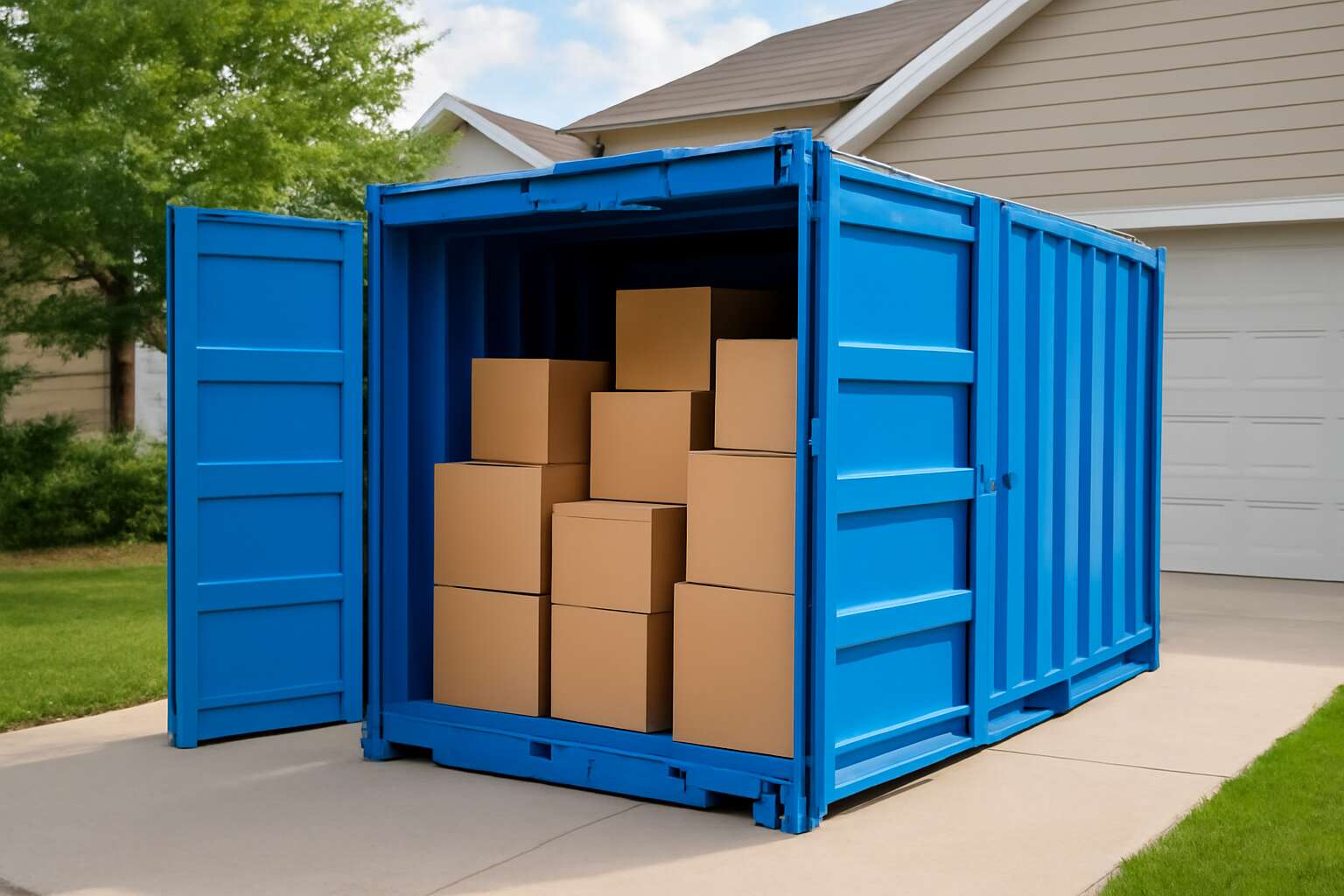
Choosing the right containers for a seamless move
Container types and sizes explained
In South Africa, relocations run smoother when the container size matches the load—68% report fewer headaches and faster moves as a result. For a seamless process, selecting the right shipping containers to move matters. The aim is simple: fit the belongings, protect them, and keep access routes clear during the journey.
Container types and sizes vary, and the choice hinges on volume, entry points, and how the space will be used. The following options cover common moving scenarios:
- 20-foot standard: compact and economical for small flats or a single room’s worth of items.
- 40-foot standard: ample room for larger households or a full household load.
- 40-foot high-cube: extra height for bulky items or dense packing.
When evaluating options, focus on access points, flooring integrity, and secure locking mechanisms. A well-matched container keeps goods shielded and the move moving, without forcing a scramble at the crane, dock, or final doorstep!
Assessing load capacity and weight limits
In South Africa, relocations run smoother when the container size matches the load—68% report fewer headaches and faster moves as a result. That success hinges on understanding load capacity before a single item is packed, so everything travels without surprises.
When choosing shipping containers to move, weight limits aren’t abstract numbers; they determine how much you can pack and how it travels. Consider these factors as you assess capacity:
- Container-rated payload and gross weight to stay within limits
- Total load including packing materials and boxes
- Weight distribution to preserve balance and floor safety
Beyond numbers, look at access points, flooring integrity, and locking mechanisms—these guard the journey from the dock to the doorstep. When weight and capacity align, shipping containers to move perform with less friction and more predictability.
Key features: climate control, security, and durability
Choosing the right container for a seamless move is a quiet duel between practicality and promise. For many South African relocations, shipping containers to move become the difference between friction and flow, adapting to climate shifts and turning the unknown into a steady rhythm!
Key features to weigh are climate control, security, and durability—three pillars that keep belongings calm, safe, and ready for the next chapter. When these elements align, the move flows with fewer sirens and more song.
- Climate control options to stabilize temperature and humidity
- Security measures such as robust locks and seals
- Durable construction with corrosion-resistant steel and reinforced floors
Consider accessibility and easy unloading, ensuring doors, flooring, and latches withstand daily wear. The right container is less about size and more about a harmonious partnership.
Renting vs purchasing a container
In South Africa’s shifting climate, the right container is a partner, not just a box. “A good container is a passport for your belongings,” as one veteran mover likes to say. The choice sets the tempo of the whole journey.
Choosing between renting and purchasing hinges on how long you’ll need it, how often you move, and how much you value flexibility.
- Cost efficiency and cash flow
- Maintenance and wear responsibilities
- Flexibility for future moves or storage
If the plan is a single move, renting can be the practical path; if relocations are frequent or you want a modular solution, buying pays off over time. When considering shipping containers to move, align features with your route, weather, and access.
Budgeting for your container move
Across South Africa, 60% of relocations stumble at the last mile when plans and boxes fail to align—a calamity a savvy container buyer avoids. Shipping containers to move can be called a passport for your belongings, unlocking passage through dust, dunes, and city blocks with quiet efficiency.
Choosing the right containers for a seamless move and budgeting the journey hinges on grounding your plan in a few non-negotiables. Consider route access, ground clearance, delivery windows, insurance, and coordination with your transport partner to avoid costly delays.
- Route access and ground clearance at pickup/drop-off
- Weather exposure and corrosion risk
- Delivery windows and handover coordination
- Insurance requirements and liability coverage
With weather-savvy coatings and long-term planning, the container becomes a modular ally rather than a burden—helping you glide from door to deck with fewer surprises and more certainty.
Planning and timing for containerized relocation
Creating a moving timeline and flexible window
A precise moving calendar can shave days off a relocation, and in South Africa, timing matters as weather and holidays bite. The plan for shipping containers to move unfolds into a carefully choreographed sequence, with buffers that feel almost cinematic. The clock becomes a character in this story, guiding each choice.
Crafting a moving timeline demands a flexible window that accommodates the realities of logistics. Consider these high-level factors to keep the process fluid:
- Seasonal demand and public holidays that affect availability
- Weather buffers for coastal routes and inland legs
- Delivery and access windows at origin and destination
When those elements align, the relocation narrative gains momentum. The timeline becomes a living document, not a rigid script, and that adaptability is the quiet advantage of arranging shipping containers to move.
Permits, access, and site readiness planning
Planning permits, access, and site readiness are the quiet heartbeat of any container move in South Africa. Time is money, and a single permit delay can ripple through a relocation. “Planning is everything,” a veteran operations supervisor once told me. For shipping containers to move, the path from curb to container yard must be cleared in advance—permits checked, access mapped, and a simple sequence visualized so crews can glide from origin to destination without wobble.
Pre-move checks for permits and site readiness can be distilled into a compact plan:
- Permits and approvals: road-use, municipal by-laws, and utility constraints
- Access and site layout: driveway width, turning space, and level ground
- Timing windows: delivery hours, crane availability, and weather buffers
- Coordination with nearby sites: neighbourhood and authority notifications
Inventory and packing plan for a container move
The clock is an unforgiving tutor in container moves. A compact truth: planning and timing unfold the choreography from curb to container yard with surgical precision. In the world of shipping containers to move, the prelude is an inventory and packing plan that turns chaos into order, where every item finds its rightful place before a single pallet is touched.
- Inventory audit and item categorization by fragility and size
- Decluttering and strategic grouping to optimize space
- Packaging hierarchy and labeling schema to ease loading and unloading
- Space-planning to balance weight and accessibility
- Schedule alignment with the move window and handling crews
When the pieces click, the move becomes a quiet, decisive ritual, ready to glide from origin to destination without wobble.
Coordinating delivery windows with facilities and carriers
Timing is the quiet conductor behind any container relocation. A recent industry pulse shows that 67% of on-time deliveries hinge on locking the window two weeks in advance. For shipping containers to move, coordinating delivery windows with facilities and carriers is less about luck and more about choreography—gate passes, dock access, and not arriving when the forklift crew is on coffee break.
Buffer days and weather contingencies keep the plan from turning into a stop-start performance. In South Africa, where port congestion and peak-season surges rear their brass, aligning the move window with both the carrier’s timetable and the site’s readiness removes the wobble on the curb.
When timing clicks, the rest glides—containers roll, doors swing, and the move feels almost telepathic.
Packing and securing items for container moves
Packing best practices by item category
Move day is the moment of truth: up to a third of in-transit damage traces back to sloppy packing rather than the container itself. When you’re arranging shipping containers to move, precision becomes your strongest ally—tight padding, secure closures, and a clear resting place for every item, especially across South Africa’s varied climates.
Here are packing best practices by item category to maximize space and minimize shifting:
- Fragile items: wrap individually, cushion with foam, and place in small secure boxes.
- Electronics: keep cords tidy, use anti-static wrap, and keep original boxes when possible.
- Dishes and glassware: stack with dish towels and use partitioned crates.
- Clothing and textiles: roll fabrics, fill gaps with soft items to prevent movement.
Keep weight balanced and secure with load-rated straps; label zones for quick checks; and test for movement before the container is sealed, so every shift stays predictable on road and sea!
Damage prevention: padding, blankets, straps, and tie-downs
A third of in-transit damage traces back to sloppy packing, not the container itself. When you’re arranging shipping containers to move, precision becomes your strongest ally. Padding and blankets buffer delicate items, while straps and tie-downs discipline their positions, minimizing contact and shifting.
- Padding tailored to item shape and fragility
- Blankets to cushion edges and bulkier pieces
- Straps that grip without bruising
- Tie-downs anchored to secure points
Label zones to communicate weight balance to crews, and a quick movement check before sealing serves as a timely gauge. Across road and sea, this approach helps maintain order through South Africa’s varied climates.
Weight distribution and load sequencing inside the container
Every move deserves a stage, and inside a container the drama is your contents. When planning shipping containers to move, precision is your strongest ally. Weight distribution begins with a clear plan for distribution, not impulse stacking.
Place the heaviest items on the floor, centered, to forge a stable toe-hold. Weight distribution and load sequencing inside the container guide every placement. Build a second tier with lighter goods, wedging gaps with padding to stop shifting. Communicate weight zones through clear labeling so crew members can anticipate forces along South Africa’s diverse roads and coastlines.
- Sort by gravity: place heavy items on the floor toward the center.
- Fill voids with padding to prevent shifting and contact.
- Secure with straps to reinforced points; test movement before sealing.
This disciplined approach keeps momentum steady, ensuring packing integrity across South Africa’s varied corridors.
Weatherproofing and moisture protection strategies
Moving goods with containers demands more than brute force; it requires forethought. In South Africa’s climate, coastal humidity and inland heat duel at the doorway, so weatherproofing must be airtight. See the container as a fortress—sealed, dry, ready for the voyage. Every item is wrapped, every seam checked, every breath of moisture stopped. these shipping containers to move aren’t a catchphrase; it’s a discipline.
Weatherproofing starts with desiccants, barrier wraps, and raised storage. Damp-prone items rest on pallets; doors are sealed and seams tested. Desiccants and humidity indicators act as sentinels against moisture, barrier wraps and plastic sheeting form a moisture shield, and gasketed doors with taped seams reduce entry points.
- Desiccants and humidity indicators
- Barrier wraps and plastic sheeting
- Gasketed doors and taped seams
These choices turn a rough journey into a measured cadence, keeping cargo calm as you traverse South Africa’s varied corridors and coastlines.
DIY packing versus professional services
Move planning in South Africa is a study in restraint: 60% of damage claims trace to packing errors. Packing items for shipping containers to move is more than stacking boxes; it is a quiet choreography—careful, deliberate!
DIY packing offers autonomy and lower upfront costs, but it wears you down in time and risk; I’ve watched moves derail when attention slips. Professional services bring seasoned judgment and secure load discipline that travels well across coastlines. In practice, every choice—how you wrap, how you brace—becomes part of the journey.
For those who opt to do it themselves, the following steps keep the rhythm steady:
- Assess fragile items and group them by risk
- Label and maintain a live inventory as you pack
- Use purpose-built, stackable containers with tested securing methods
Loading, unloading, and on-site handling
Safe loading techniques and equipment
On-site handling converts plan into precision. Safe loading hinges on measured lift angles, clear sightlines, and a well-briefed crew. For shipping containers to move, a disciplined sequence keeps everything stable from dock to doorway—discipline matters!
Key steps support the flow without surprises:
- Align ramps and docks before touching loads.
- Use certified restraints and dampening devices to secure goods.
- Employ spotters and radio comms for truck-to-container coordination.
- Inspect container floor and tie-down points before hoisting.
With disciplined on-site handling, unloading follows the same careful choreography, keeping crews safe and timelines intact.
Securing items during transit and inside the container
In the quiet calculus of relocation, loading and unloading unfold like a city at dawn—measured, luminous, and resolute. For teams orchestrating shipping containers to move, discipline is the melody that keeps every hinge and counterweight honest.
This choreography extends beyond the crane. Securing items during transit and inside the container is a study in restraint, balance, and care—a ballet of weight distribution that respects both cargo and crew.
A few guiding principles that keep the flow seamless:
- Coordinated spotters and clear radio communications to guide the lift
- Robust restraints and dampening devices that cushion every movement
- Ongoing checks of the container floor and tie-down points to preserve order
From dock to doorway, the cadence remains steady, turning risk into rhythm and turning a move into an occasion worthy of the voyage.
Unloading strategies and placement planning at destination
Across South Africa’s staging yards, the first light finds the cargo balanced on the cusp of motion. A single well-timed rhythm—strap, pivot, release—can turn a tense moment into a smooth arrival, a quiet testament to disciplined practice.
Loading and on-site handling demand calm, deliberate action. As we draw a container into place, I watch for even floor wear, clean latching, and a clear path to the door. The phrase “shipping containers to move” is not just rhetoric; it’s a contract with space and time.
- Unloading routes considered from dock to final position, noting ground conditions and overhead clearances.
- Collaboration with site teams to stage a respectful release that preserves weight balance and traffic flow.
- Alignment of doors and load points with access, ramps, and receiving areas to facilitate placement.
This choreography keeps the voyage from becoming a stumble.
Insurance considerations during handling and transfer
In the choreography of loading and unloading, precision replaces noise. For shipping containers to move in South Africa’s bustling docks, the on-site handling sets the tempo between effort and ease. I measure floor wear, test latches, and read the corridor as a harbor approach—soft, controlled, inevitable. The moment the container slides into place, balance becomes trust and momentum becomes grace. Each measured breath keeps the bay calm, turning potential tension into a quiet arrival, where safety and dignity travel side by side.
- Coverage during loading, transit, and unloading to cover replacement or repair.
- Documentation of condition before and after handling.
- Clear insured parties, declared value, and ample policy limits.
Insurance considerations during handling and transfer arrive as quiet guardians. When the coverage mirrors the cargo’s worth, the journey remains a story rather than a stumble, and the tangible certainty of protection steadies the hands that move it.
Contingency planning for on-site delays and access issues
Fast, controlled choreography defines loading, unloading, and on-site handling for shipping containers to move through South Africa’s ports. The moment a container settles, precision steadies the rhythm; a quiet, deliberate cadence keeps crews safe and timelines intact as steel meets dock and truck meets timber!
Contingency planning for on-site delays and access issues isn’t theoretical—it keeps progress breathable. A light, flexible playbook can ease bottlenecks without sacrificing safety:
- Alternate access avenues and staging areas
- Reserved yard blocks to prevent bottlenecks
- Standby equipment and quick-swap options
- Real-time updates with a dedicated supervisor
By anticipating disruptions, teams maintain calm in the bay and preserve dignity in every movement—because the journey is as important as the destination, and every placement remains a measured arrival.
Logistics, insurance, and post-move steps
Route planning and carrier coordination for container moves
Logistics in motion is more than boxes and boats—it’s choreography. When planning shipping containers to move, the route becomes a living map of time, tides, and tenacity. In South Africa, the journey threads Durban to Cape Town, demanding sharp planning from the first mile and readiness to adapt to shifting port schedules and last-mile access.
Route planning and carrier coordination demand precision: stable transit corridors, coordinated pickup, and gate-time alignment. A compact checklist helps:
- Transit windows and back-up routes
- Carrier fit to container size and gear
- Real-time updates and contingency messaging
Insurance acts as a second compass—marine cargo cover, a policy that travels with the shipment, and clear liability terms for every handoff in the chain. Post-move steps matter just as much: confirm receipt, photograph condition on arrival, document discrepancies, and file the paperwork for customs and facilities. That disciplined closure keeps shipping containers to move from risk to reliability.
Insurance coverage options for container relocation
Logistics in motion hinges on more than storage—it’s choreography of timing, paperwork, and risk. For shipping containers to move, insurance acts as a steadfast compass, offering marine cargo cover and clear liability terms that travel with the shipment. In South Africa, the moment the container lands, post-move rituals begin: confirm receipt, photograph condition on arrival, log discrepancies, and file the necessary customs and facility paperwork.
Insurance coverage options for container relocation vary with risk appetite and route complexity. Consider these common choices:
- All-risks (open cover) for broad protection across the journey
- Named-perils policies for defined hazards such as theft or water damage
- Carrier-liability and freight-forwarder protections to fill gaps at transfers
With disciplined post-move verification, these options convert risk into reliability for shipping containers to move.
Documentation, permits, and cross-border considerations
Across South Africa and neighbouring borders, three out of ten container moves hit delays at some point—it’s less a trip and more a choreography of timing, paperwork, and risk, one I’ve learned to respect! Shipping containers to move demand insurance as a steady compass through weathered ports and shifting regulations.
From my experience, post-move steps begin the moment the container lands: verification, facility handover, and documentation that clarifies cross-border commitments. The right insurance coverage stays with the shipment, offering liability clarity and peace of mind as the cargo transitions from one hand to the next.
- Documentation essentials: commercial invoices, bills of lading, and clearance notes
- Permits and facility-readiness: approvals for site access and handling
- Cross-border considerations: duties, taxes, and regulatory alignment with SA partners
With disciplined checks and clear records, the routine around shipping containers to move becomes a stabilizing force rather than a source of risk.
Container return, resale, or disposal options after move
After the move, the real choreography begins: facility handovers, asset verification, and documents that lock in cross-border commitments. This lifecycle—shipping containers to move—demands steady logistics and clear handoffs. Logistics teams map the container’s first mile in the new setting and confirm that clearance notes accompany the shipment, reducing snag points in South Africa’s port corridors.
Insurance remains a steadfast anchor through the handover, guarding against unexpected loss and ensuring liability clarity as the cargo shifts from one duty of care to the next—an essential consideration for shipping containers to move.
Post-move options extend the container’s life. Choose container return to the depot, resale to a new user, or disposal for recycling or scrap, aligning with sustainability goals and cost efficiency.
- Container return to depot with condition check
- Resale to a fellow business or trader
- Disposal or recycling at approved facilities



0 Comments