TSI Central Station Logistics – Transport & Logistics is a Logistics service establishment in Germiston, Gauteng, South Africa
TSI Central Station Logistics – Transport & Logistics: Overview of Services and Customer Experience
TSI Central Station Logistics operates within Germiston, Gauteng, offering an array of transport and logistics services designed to deliver real-time visibility, cost savings, and streamlined supply chain management. The company presents itself as a technologically enabled independent service provider that focuses on connecting all players in the logistics chain through a single, secure cloud-based platform. This approach aims to reduce complexity and provide more predictable outcomes for its clients.
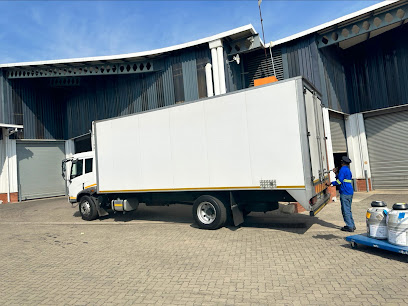
In terms of core services, TSI Central Station Logistics highlights a comprehensive portfolio across multiple modes of transport. Premium trucking (ROAD) solutions are described as delivering timely and secure deliveries across an established logistics network. For businesses requiring rapid international reach, the firm offers air-freight services, marketed as fast and dependable with global reach. Similarly, sea freight (OCEAN) is positioned to provide reliable, global transportation for cargo. The service mix is rounded out by distribution services that aim to integrate end-to-end supply chain functions, allowing for smoother movement from order to doorstep.
Container fumigation is among the specialised offerings, framed as a safe and effective service to maintain cargo integrity and regulatory compliance. This breadth of services suggests a cradle-to-grave approach for clients seeking an independent provider capable of handling multiple facets of logistics within one ecosystem. The emphasis on technology is a recurrent theme, with references to live tracking, proactive alerts, and automated optimisation designed to improve shipment speed and customer satisfaction.
The company describes a philosophy focused on operational excellence and cost savings. It positions itself as a partner that understands that each business is unique, asserting that tailored solutions are crafted to align with strategic objectives. The emphasis on proactive support and hands-on management underlines a commitment to reducing the administrative burden on clients, so they can concentrate on core business activities while the logistics provider manages the details involved in movement, compliance, and delivery.
Several statements on the website reinforce a strong value proposition. The organisation claims to guarantee reductions in transport and logistics costs by leveraging advanced technology and a team of skilled professionals. A key element of the offering is the on-going ability to negotiate with multiple transporters, providing clients with choice and risk-spreading opportunities during peak periods. The platform is described as connecting clearing agents, importers and exporters, trucking, airlines, ports, and customs, with visibility across the entire process even if only a portion of the chain is managed.
Client testimonials and case studies are presented to illustrate potential savings and efficiency gains. A notable example references significant annual savings achieved for a long-standing client after switching to TSI Central Station, demonstrating the potential impact of the service on bottom-line performance. While client narratives indicate positive experiences with process clarity, dashboard access, and end-to-end control, the publicly shared excerpts focus on praise for flexibility, system transparency, and overall service delivery.
From a customer experience perspective, the organisation emphasises a hands-on, guided onboarding process. Reviews from user feedback highlight easy onboarding, clear pathways through the logistics dashboard, and the benefit of guidance from a dedicated team. The emphasis on real-time information and alerts is positioned as a differentiator, enabling customers to anticipate and manage exceptions rather than reacting after delays occur.
Typical engagement with TSI Central Station Logistics is framed around a request for services, followed by a demonstration of the technology platform and a tailored solution. The firm promises a prompt response after initial contact, with a demonstration arranged within a short timeframe. This aligns with an overarching narrative of responsiveness, transparency, and ongoing support throughout the life cycle of a client relationship.
Practical tips for potential customers include outlining specific needs and volumes to facilitate an accurate comparison across transport modes, requesting a demonstration of the live tracking and alert features, and considering a cradle-to-grave plan that integrates import/export activities, trucking, and distribution. Clients should examine the level of real-time visibility offered, the ability to receive proactive alerts during transit, and the balance between automated optimisation and personalised, hands-on management. When evaluating cost, attention should be paid to whether the provider guarantees savings and how those savings are achieved—through technology, carrier negotiations, or process improvements.
Operational hours and exact local servicing details are not explicitly stated on the public content, though the business is positioned as offering global logistics capability with a regional base. The company clearly communicates that it serves clients seeking control, cost reduction, and improved service levels through a connected logistics platform and an experienced team.
Germiston
Gauteng
South Africa
Sorry, no records were found. Please adjust your search criteria and try again.
Sorry, unable to load the Maps API.
Logistics Service Providers in Germiston, Gauteng
In Germiston, Gauteng, logistics service providers offer a range of coordinated activities designed to move goods efficiently from suppliers to customers. The focus is on reliability, speed, and transparency, with many organisations serving manufacturing, retail, and distribution sectors that rely on timely deliveries to maintain production schedules and customer satisfaction. Services are generally organised to support both local and regional regimes, reflecting South Africa’s busy road network and distribution demands.
Typical offerings fall into several broad categories. First is transport and distribution, which involves the movement of goods by road, rail, or air. Road transport remains the backbone for most Germiston operations, including full truckload, less-than-truckload, and palletised deliveries. A second major element is warehousing and storage, where goods are received, stored, and prepared for dispatch. Modern facilities may include secure storage, pallet racking, inventory management, and cross-docking, aimed at reducing handling times and improving throughput. Thirdly, value-added services are commonly provided, such as order picking, packaging, labelling, kitting, and light assembly, tailored to specific customer requirements.
Customers can expect a structured process underpinning these services. Incoming goods are checked against documentation, received into the warehouse system, and then stored or routed directly to the appropriate area for dispatch. When orders are placed, staff pick the items, verify quantities, and prepare them for shipment. Freight is arranged with carriers that meet the required service levels and compliance standards. Real-time tracking and regular updates are often available, enabling visibility from receipt to delivery and assisting with exception management when delays occur. In some instances, customs and compliance support may be required for cross-border movements, subject to the nature of the goods and destinations involved.
Practical considerations for engaging a logistics service in Germiston include ensuring alignment with local road networks and traffic patterns, as well as understanding the implications of road freight regulations, vehicle weights, and loading requirements. Storage solutions should match product characteristics, with appropriate temperature control for perishables or secure handling for high-value items. Businesses may also weigh the benefits of consolidated shipments versus dedicated transport, depending on volume, delivery windows, and budget. It is common to discuss service level agreements that specify lead times, on-time delivery targets, and response times for issues or deviations.
Environmental and safety considerations frequently shape service choices. Many providers prioritise efficient routing to reduce fuel consumption and emissions, alongside routines for secure handling, fire safety, and compliance with relevant industry standards. Insurance coverage for goods in transit and storage is another important factor, offering protection against loss, damage, or theft. Documentation such as delivery notes, bills of lading, and inventory reports should be clear and accurate to minimise administrative friction and support accurate accounting and auditing.
From an operational perspective, the advantage of working with a Germiston-based logistics partner lies in proximity to major industrial areas, suppliers, and distribution hubs. This proximity can translate into shorter lead times, reduced handling, and more flexible scheduling. While technology platforms often provide shipment tracking and inventory control, the fundamental model remains people-oriented: coordination between receivers, carriers, warehouse staff, and clients to ensure goods move smoothly from point A to point B. For businesses in Gauteng, the ability to adapt to peak periods, customs requirements, and regional network dynamics is central to a successful logistics strategy.
- Transport management and distribution planning
- Warehousing, storage, and order fulfilment
- Inventory control and real-time visibility
- Value-added services such as kitting and packing
- Compliance, insurance, and risk management