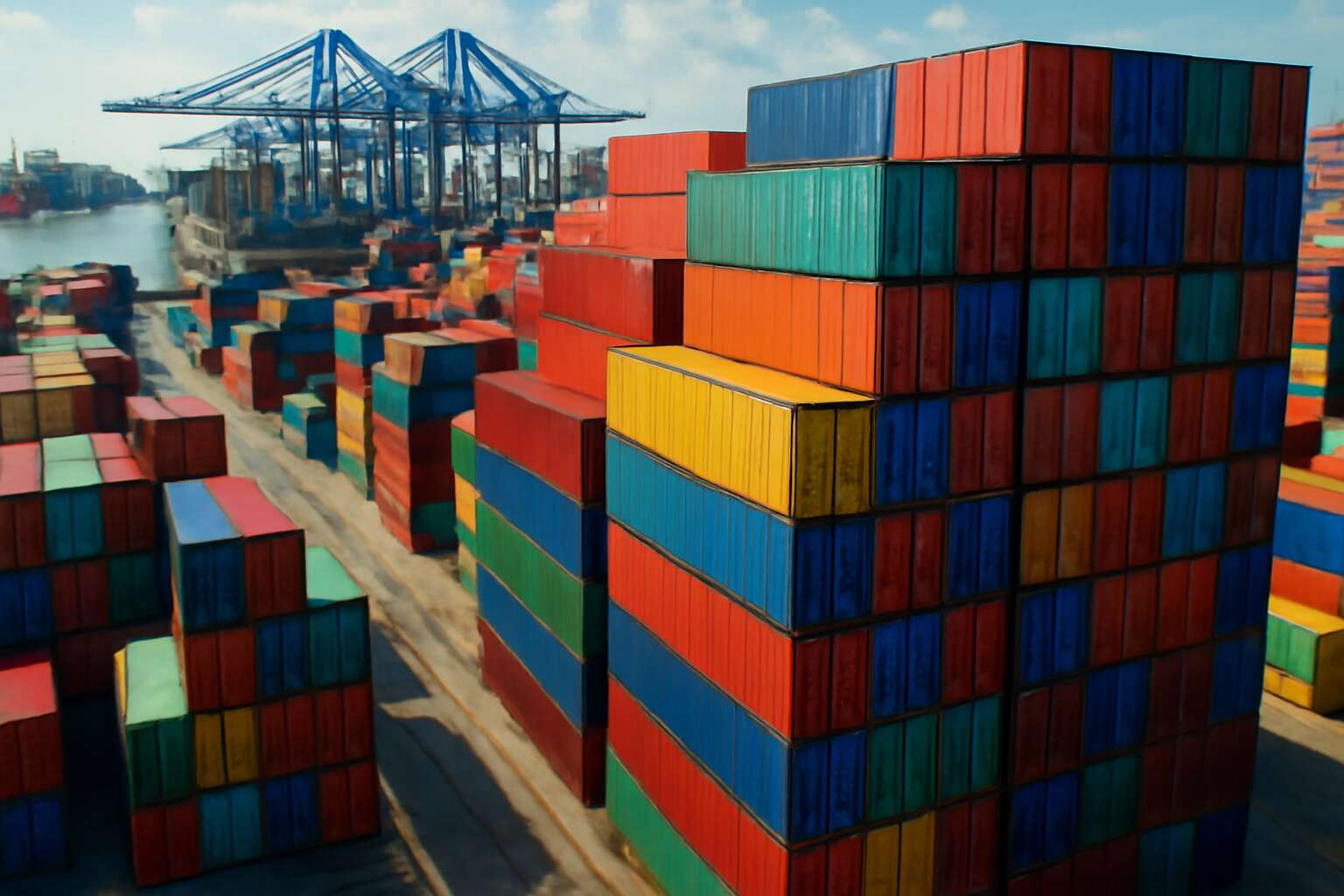
Overview of Shipping Containers
Definition and Purpose of Shipping Containers
In the vast oceanic ballet of global trade, the largest shipping containers stand as titanic sentinels—monolithic guardians of commerce that transform fleeting cargo into a floating fortress. These colossal structures, meticulously engineered for both strength and efficiency, hold the power to move mountains of goods across continents with a single voyage. Their purpose is as profound as their size: to streamline the journey of raw materials and finished products, ensuring that the rhythm of world economies remains unbroken.
At their core, shipping containers serve as the universal language of transport—interchangeable, durable, and adaptable to myriad needs. Among these giants, the largest shipping containers are marvels of modern engineering, capable of carrying up to 40 or even 45 feet of cargo in a single, seamless unit. This expansive capacity not only reduces the number of trips but also amplifies the efficiency of global supply chains, weaving a tapestry of interconnected commerce that spans oceans and continents.
History and Evolution of Container Sizes
The story of shipping containers is a tale of innovation and scalability. Since their inception in the mid-20th century, these steel boxes revolutionized global trade. The initial containers, often 20 feet long, quickly proved their worth, but the industry’s appetite for efficiency pushed sizes upward. Today, the largest shipping containers can reach lengths of 45 feet or more, drastically increasing cargo capacity and reducing costs. This evolution wasn’t accidental; it was driven by the need to move goods faster and more economically across oceans.
As shipping demands grew, so did the dimensions of these giants. The development of the largest shipping containers marked a turning point, allowing fewer trips for each shipment and boosting the overall efficiency of supply chains. The industry’s focus on size and strength continues to shape the future of maritime logistics. For companies investing in large-scale freight, understanding these giants is essential—they are the backbone of modern global commerce.
Importance in Global Trade and Logistics
In the grand symphony of global trade, shipping containers are the unsung heroes—silent but essential. The largest shipping containers, in particular, play a starring role in moving vast quantities of goods across oceans with astonishing efficiency. These giants aren’t just oversized metal boxes; they’re the backbone of international commerce, accommodating everything from electronics to raw materials. It’s no exaggeration to say that without these colossal cargo carriers, our shelves would be emptier and supply chains more fragile.
Remarkably, the evolution of the largest shipping containers has redefined freight logistics, enabling fewer trips and lowering transportation costs. As industries demand more streamlined operations, these behemoths continue to grow in size and capacity. They are the titans of maritime logistics, ensuring that South Africa’s ports remain vital hubs in the global supply chain. With their impressive dimensions and robust design, the largest shipping containers are truly the marvels of modern shipping engineering.
Standard Container Sizes vs. Largest Shipping Containers
Typical Standard Shipping Container Dimensions
Standard shipping containers are the backbone of global trade, but the largest shipping containers take cargo capacity to a new level. These behemoths measure up to 40 or even 45 feet in length, with some specialized designs reaching 53 feet. While standard containers typically measure 20 or 40 feet, the largest shipping containers are built for extraordinary loads, often used in bulk or oversized freight. Their dimensions allow for seamless integration into existing logistics systems, yet they push the boundaries of what’s possible in container shipping.
For comparison, typical standard shipping container sizes are:
- 20-foot containers (6.1 meters)
- 40-foot containers (12.2 meters)
In contrast, the largest shipping containers can be up to 53 feet long (16.2 meters), with some models offering wider or taller variants to maximize volume. These giants are essential for industries that require transporting large, bulky cargo, making them vital in the world of international logistics. Their size and capacity make them stand out in the realm of shipping, providing solutions where standard containers simply cannot suffice. With these massive containers, companies can optimize freight efficiency and reduce transportation costs significantly.
Differences Between Standard and Large Containers
While standard shipping containers are the familiar giants seen freighted across ports worldwide, the largest shipping containers push the boundaries of capacity and ingenuity. These colossal structures, reaching up to 53 feet in length, are designed to carry oversized or bulk cargo that simply cannot fit into traditional containers. Their dimensions often include wider or taller variants, creating a volume that can hold substantial loads with ease. For industries in South Africa and beyond, these massive containers are essential in transporting heavy machinery, large industrial components, or large quantities of raw materials.
In contrast to the typical 20- or 40-foot containers, the largest shipping containers are engineered for specialized needs. They often feature reinforced structures to handle extra weight and may include features such as wider frames for even greater capacity. This distinction is crucial for logistics companies aiming to optimize freight efficiency and reduce transportation costs.
- Enhanced volume capacity
- Reinforced structural integrity
- Designed for oversized cargo
Their size and robustness make them invaluable for sectors that demand the movement of large, unwieldy items—truly the behemoths of global shipping. The difference between standard and largest shipping containers is stark, yet both serve a vital purpose in maintaining the flow of international trade, especially in regions like South Africa where infrastructure is continually evolving to accommodate these giants.
Advantages of Larger Containers in Shipping Efficiency
In the bustling corridors of global commerce, larger-than-life shipping containers are transforming the way industries move colossal cargo. These giants—often stretching to 53 feet in length—are not just extended versions of standard containers; they are marvels of engineering designed for maximum efficiency. The advantages of the largest shipping containers are profound, especially for South African industries that handle bulky machinery or vast raw material loads. Their increased volume and reinforced structures enable freight operators to transport more with fewer trips, reducing both costs and carbon footprints.
While standard containers typically measure 20 or 40 feet, the largest shipping containers push beyond traditional boundaries. They often feature wider frames and higher weights, making them ideal for oversized or heavy cargo. This capacity for oversized freight means fewer shipments are needed, streamlining logistics and accelerating delivery times. For sectors dealing with industrial equipment or raw materials, these containers are nothing short of transformative. Their robust design ensures safety and durability, even when carrying the heaviest loads, offering a seamless bridge between manufacturing hubs and international markets.
In the realm of shipping efficiency, the largest shipping containers stand out for their ability to maximize space and reduce logistical complexity. They embody a perfect synergy of capacity and resilience, making them indispensable in the modern trade landscape. Whether navigating South Africa’s ports or reaching global markets, these colossal containers are a testament to human ingenuity and the relentless pursuit of progress in international shipping. Their presence signifies a new era—one where size and strength redefine the limits of possibility.
Types of Large Shipping Containers
High-Cube Containers
Among the marvels of modern logistics, the largest shipping containers stand as silent giants, transforming the very fabric of global trade. These colossal vessels, often soaring above the standard dimensions, are engineered to maximize efficiency while navigating the intricate web of international commerce. They embody a paradox—immense yet meticulously constructed, designed to carry the weight of economies on their broad shoulders.
High-Cube containers, a prominent type of the largest shipping containers, exemplify this blend of strength and sophistication. These containers are distinguished not only by their increased height but also by their ability to optimize cargo space, allowing for the transport of oversized goods that wouldn’t fit within traditional dimensions. Their towering stature—typically 9.5 feet tall—offers a significant advantage in shipping large, bulky items or volume-sensitive cargo.
For those seeking to understand the versatility of these giants, consider the following:
- Reinforced structural design to support heavy and irregular loads
- Enhanced height for accommodating taller freight without sacrificing stability
- Availability in various lengths to suit specific logistical needs
Open-Top Containers
Among the pantheon of the largest shipping containers, open-top variants stand out as versatile titans of the seas. These colossal structures, often towering more than 9.5 feet in height, are designed to accommodate cargo that defies the constraints of traditional containers. Their open-top design allows for the seamless loading of oversized or irregularly shaped goods, making them indispensable in the world of international trade.
Unlike their standard counterparts, open-top containers feature a removable tarpaulin roof, granting unparalleled access for heavy machinery, large equipment, or bulky items. This adaptability ensures that the largest shipping containers can handle everything from construction materials to industrial machinery, all while maintaining structural integrity. In fact, these giants often come in various lengths, tailored to meet specific logistical demands, exemplifying the flexibility that makes them so vital in global commerce.
In the relentless pursuit of efficiency, the largest shipping containers—particularly the open-top variety—serve as quiet yet powerful symbols of human ingenuity. They embody a perfect harmony of strength, utility, and adaptability, transforming the way goods traverse the world’s waterways. The sheer magnitude and versatility of these containers underscore their importance in the seamless flow of international trade, especially across South Africa’s bustling ports and shipping corridors.
Flat-Rack Containers
When it comes to the titans of the shipping world, the largest shipping containers are nothing short of engineering marvels. Among these giants, flat-rack containers carve out a niche so specialized, it’s practically a niche within a niche. Designed without side walls, these containers look more like a giant’s bed frame than a traditional box—perfect for oversized cargo that refuses to fit into the standard mold.
Flat-rack containers are particularly popular for transporting heavy machinery, construction materials, or oddly shaped items that need to be laid flat or secured tightly. Their open sides and collapsible features make them a logistical dream, offering unparalleled flexibility. For those curious about the largest shipping containers in this category, they can reach lengths of up to 45 feet, making them a boon for moving bulky equipment across South Africa’s busy ports and beyond.
Here’s a quick overview of what makes flat-rack containers a standout among the largest shipping containers:
- Designed for oversized or heavy cargo that can’t be easily containerized
- Available in various lengths, with the largest reaching 45 feet
- Foldable side panels for efficient stacking and storage when empty
In the grand hierarchy of the largest shipping containers, flat-racks continue to prove that sometimes, the biggest things need the simplest design—no walls, no fuss, just pure capacity. They embody the essence of utility, seamlessly bridging the gap between industrial ambition and maritime logistics. Whether crossing oceans or navigating South Africa’s vibrant ports, these containers demonstrate that size, indeed, does matter—especially when it’s about hauling the extraordinary.
Refrigerated (Reefer) Containers
Refrigerated containers, affectionately known as reefers, are among the most vital large shipping containers in the global trade network. These marvels of engineering combine robust insulation with sophisticated temperature control systems, ensuring perishable goods arrive fresh, no matter the distance. With the demand for fresh produce, pharmaceuticals, and temperature-sensitive commodities soaring, reefers have become an indispensable component of maritime logistics.
The largest shipping containers in this category can reach impressive lengths of up to 53 feet, providing ample space for transporting large quantities of temperature-sensitive cargo. Their design seamlessly integrates insulation materials with advanced cooling technology, making them a versatile choice for international trade routes that traverse diverse climates. For added flexibility, some reefers feature adjustable temperature zones, allowing different products to be shipped simultaneously without cross-contamination.
- High-capacity refrigeration units capable of maintaining precise temperatures
- Heavy-duty construction tailored for long-haul journeys across oceans
- Innovative insulation materials that enhance energy efficiency and cargo safety
In South Africa’s bustling ports, these large shipping containers are often the backbone of the fresh produce export industry, ensuring that everything from South African wines to exotic fruits reaches international markets in peak condition. Their ability to combine size, efficiency, and temperature control makes reefers a standout among the largest shipping containers—truly a testament to technological ingenuity in maritime logistics.
Specialized Large Containers
While the world often regards the standard 20- or 40-foot containers as the backbone of maritime trade, the realm of the largest shipping containers reveals a different dimension of logistical prowess. These giants, sometimes stretching up to 53 feet in length, embody the pinnacle of shipping innovation. Their sheer scale allows for the transportation of extraordinary volumes of cargo, transforming how industries approach global distribution.
Among these colossal vessels, specialized large containers such as open-top and flat-rack variants stand out for their versatility. These large shipping containers are designed to accommodate oversized or irregularly shaped cargo that cannot fit into conventional containers. For instance, heavy machinery and industrial equipment often rely on open-top containers, which provide unobstructed access from above, making loading and unloading a seamless affair. Flat-rack containers, on the other hand, excel in transporting large, bulky items that require a sturdy, open platform.
- Refrigerated (Reefer) containers for temperature-sensitive goods
- Open-top containers for oversized cargo
- Flat-rack containers for heavy or irregular items
The elegance of these large shipping containers lies not only in their size but also in their adaptability. Whether safeguarding perishable South African exports or accommodating oversized machinery, these containers continue to redefine the limits of maritime logistics. Their design sophistication ensures that the largest shipping containers can meet the demands of a global economy hungry for efficiency and innovation.
The Largest Shipping Containers in the World
Ultra Large Container Ships (ULCS) and Mega Containers
The horizon of maritime logistics is constantly pushed forward by the advent of ultra-large container ships (ULCS), which dwarf traditional vessels and redefine what’s possible in global shipping. These giants of the sea are equipped with the largest shipping containers ever built, capable of carrying staggering volumes of cargo across oceans with remarkable efficiency. The largest shipping containers on these ships can reach lengths of up to 24 meters and hold over 24,000 TEUs (twenty-foot equivalent units), making them a marvel of engineering and logistical planning.
Ultra-large container ships exemplify the evolution of the largest shipping containers, designed not just for capacity but for optimizing voyage economics. These mega containers are often stacked in complex configurations, forming a floating city that transforms the shipping industry. Such ships and their colossal containers are instrumental in reducing transportation costs, cutting emissions, and speeding up global trade. As the world’s economies continue to grow and expand, the demand for the largest shipping containers remains a testament to human ingenuity in connecting distant shores.
Notable Records for Container Dimensions
Within the labyrinth of maritime innovation, the largest shipping containers stand as silent giants, embodying both human ingenuity and the relentless pursuit of efficiency. These colossal structures challenge our perceptions of size and capacity, reaching lengths of up to 24 meters—almost as long as a basketball court—and holding over 24,000 TEUs. Such dimensions are not mere feats of engineering but symbols of how far we have advanced in connecting distant shores.
Notable records for container dimensions reveal a fascinating story of ambition. For instance, some of the largest shipping containers ever built are designed with open-top configurations, allowing for the transport of oversized cargo that standard containers cannot accommodate. These containers have the following remarkable features:
- Length of up to 24 meters
- Capacity exceeding 24,000 TEUs
- Designed to optimize voyage economics on ultra-large container ships
Each record-breaking container pushes the boundaries of what is physically possible, serving as a testament to the relentless human drive to conquer logistical challenges. The largest shipping containers are not just about size—they represent the moral and economic weight of global trade, forging connections that define our modern civilization.
Examples of the Largest Container Sizes Recently Built
In the realm of maritime marvels, the largest shipping containers are nothing short of awe-inspiring. Recent feats include containers that stretch an astonishing 24 meters—roughly the length of a basketball court—and boast capacities exceeding 24,000 TEUs. These colossal structures are not merely engineering triumphs; they symbolize humanity’s relentless quest to redefine logistical boundaries.
Among the most notable examples of the largest shipping containers are open-top variants designed for oversized cargo, often used to transport equipment and machinery that refuse to fit within conventional confines. Their impressive dimensions facilitate the movement of extraordinary loads, proving that size indeed matters in the world of international shipping.
- Length reaching up to 24 meters
- Capacity surpassing 24,000 TEUs
- Designed to maximize efficiency on ultra-large container ships
These record-breaking containers embody the spirit of innovation and serve as silent testaments to our capacity for grand ambitions in global trade. The largest shipping containers are not just about size—they are emblematic of progress, economic strength, and the unyielding human desire to connect distant shores with ever-growing efficiency.
Design and Engineering of Large Shipping Containers
Materials Used in Manufacturing
The design and engineering of the largest shipping containers are nothing short of engineering marvels, blending brute strength with innovative craftsmanship. These colossal steel beasts are meticulously crafted to withstand the relentless battering of ocean waves, stacking pressures, and the occasional rogue wave that seems to have a personal vendetta. Materials used in manufacturing are carefully selected to balance durability and weight—think high-tensile steel and corrosion-resistant alloys that could survive a zombie apocalypse or, at the very least, a hurricane.
To ensure these giants perform flawlessly, manufacturers often incorporate advanced engineering techniques. For instance, load-bearing frameworks and reinforced corners are standard fare. When it comes to materials, the focus is on high-strength steel, which provides the resilience necessary for the largest shipping containers to carry massive loads without buckling under pressure. Sometimes, composite materials are integrated to reduce weight without sacrificing strength, making transportation more cost-effective and eco-friendly. Achieving the perfect equilibrium between design, materials, and functionality transforms these containers into the backbone of global trade—capable of ferrying everything from car parts to colossal industrial machinery.
For those curious about the specifics, here’s an overview of common materials used in manufacturing the largest shipping containers:
- High-tensile steel for structural integrity
- Corrosion-resistant coatings for longevity in salty seas
- Reinforced corner castings for stacking strength
Without such meticulous attention to design and materials, the largest shipping containers would be just oversized steel boxes—impressive but utterly useless in the grand ballet of international logistics. Instead, they stand as a testament to human ingenuity, capable of transforming oceanic chaos into streamlined commerce.
Structural Innovations for Size and Strength
The design and engineering of the largest shipping containers are nothing short of a marvel—an intricate dance between engineering prowess and innovative craftsmanship. These giants are not merely oversized steel boxes; they are meticulously crafted to withstand the unpredictable fury of the ocean, from towering waves to relentless stacking pressures. Achieving such resilience requires a blend of cutting-edge techniques and high-grade materials, transforming raw steel into vessels of immense strength and durability.
One of the most critical aspects of designing these colossal containers is reinforcing their structural integrity. Engineers often incorporate load-bearing frameworks and reinforced corner castings, ensuring that these giants maintain their integrity under the weight of stacked cargo and turbulent seas. Advanced engineering innovations, such as load distribution systems, optimize strength while reducing overall weight, making transportation more efficient and cost-effective. This careful balance of size, strength, and flexibility allows the largest shipping containers to serve as the backbone of global trade, seamlessly ferrying everything from industrial machinery to consumer electronics across vast oceanic distances.
To enhance durability, manufacturers frequently utilize corrosion-resistant coatings that protect against salty sea air and harsh weather conditions. For the most part, high-tensile steel forms the core material, providing unmatched resilience, while composite materials are sometimes integrated to further reduce weight without compromising strength. This fusion of materials and engineering ingenuity results in large shipping containers that are as reliable as they are massive—standing tall as marvels of human ingenuity in the relentless ballet of international logistics.
Safety and Compliance Standards
The design and engineering of the largest shipping containers are governed by rigorous safety and compliance standards that ensure both structural integrity and operational efficiency. These colossal structures must meet international regulations, such as those set by the International Maritime Organization (IMO) and the International Organization for Standardization (ISO). Adherence to these standards is not merely procedural; it is the backbone that sustains the seamless flow of global trade.
Safety protocols emphasize durability, stability, and resilience, especially given the extreme conditions these giants face during transoceanic voyages. Engineers incorporate meticulous testing phases, including load testing and corrosion resistance evaluations, to verify that each container can withstand turbulent seas and the rigors of stacking. To meet compliance, manufacturers often follow a detailed checklist that covers materials, dimensions, and load capacities—ensuring every large shipping container adheres to the highest safety benchmarks.
In addition to structural safety, these containers are equipped with advanced tracking and security features that align with international logistics standards, safeguarding cargo from theft and damage. This meticulous attention to safety and compliance transforms the largest shipping containers from mere cargo carriers into resilient, reliable vessels of global commerce, capable of navigating the unpredictable ballet of international logistics with unwavering strength and precision.
Benefits and Challenges of Using Large Containers
Cost Savings and Efficiency
When it comes to the largest shipping containers, the benefits are undeniable—think of them as the heavyweight champions of global trade. These behemoths maximize cargo capacity, allowing companies to transport more goods in a single trip, which translates into significant cost savings and streamlined logistics. Reduced trips mean less fuel consumption and fewer emissions, making large containers an eco-friendly choice in an industry often criticized for its carbon footprint.
However, riding the wave of large container advantages isn’t without its hurdles. Handling and logistics become more complex, requiring specialized equipment and infrastructure to manage their size and weight. Not every port is equipped to berth these giants, leading to logistical bottlenecks and increased handling costs. But for businesses willing to navigate these challenges, the payoff is a more efficient supply chain—making the largest shipping containers an essential part of the modern shipping landscape.
Handling and Transportation Logistics
The allure of the largest shipping containers lies in their unparalleled ability to transform global trade, yet this grandeur comes with its own set of intricate challenges. Handling these giants demands not just advanced equipment but also a meticulous approach to logistics that can make or break efficiency. The increased size and weight require specialized cranes, reinforced ports, and skilled operators—elements that aren’t always readily available, especially in emerging markets like South Africa.
Transportation logistics for these behemoths often involve a complex web of coordinated efforts. Ports must adapt with deep berths, heavy-duty transport vehicles, and innovative storage solutions. Here’s what makes managing the largest shipping containers a strategic puzzle:
- Extended loading and unloading times due to their size
- Higher handling costs resulting from infrastructure upgrades
- Potential bottlenecks at ports lacking the capacity for ultra-large containers
Despite these hurdles, the benefits of deploying the largest shipping containers are significant—they maximize cargo volume, reduce the frequency of trips, and ultimately cut down on operational costs. However, achieving this efficiency hinges on overcoming logistical complexities, a challenge that demands ingenuity and foresight. In the end, the decision to utilize these giants is a testament to the relentless pursuit of streamlined, sustainable global trade, even amid the formidable obstacles of handling and transportation logistics.
Structural and Design Challenges
The allure of the largest shipping containers lies in their potential to revolutionize freight movement, but their unprecedented size introduces a host of structural and design challenges. These giants must endure immense stress, requiring innovations in materials and engineering that push the boundaries of conventional container design. Reinforced steel frames and advanced locking mechanisms are essential to maintain integrity under heavy loads and rough seas.
One of the key hurdles is ensuring safety and compliance, as the structural demands of the largest shipping containers demand rigorous standards. Ports and handling facilities must adapt with specialized cranes, reinforced berths, and heavy-duty transport vehicles to accommodate these colossal structures. Without these modifications, disruptions and delays become unavoidable, especially in regions like South Africa where infrastructure can vary significantly.
Despite these challenges, the benefits of deploying the largest shipping containers are compelling. They enable a dramatic increase in cargo volume, which can substantially reduce operational costs and transit times. Yet, balancing the advantages with the complexities of design and infrastructure requirements remains a strategic puzzle—one that continues to shape the future of global trade through innovative engineering and relentless pursuit of efficiency.
Future Trends in Large Shipping Container Development
Innovations in Material Technology
As the maritime world hurtles toward an uncertain horizon, the future of the largest shipping containers promises a symphony of innovation and dark elegance. Material technology, in particular, is evolving at an almost spectral pace, weaving strength and resilience into the very fabric of these colossal sentinels of trade. Advanced composites and ultra-high-performance steels are now being employed to craft containers that can withstand the pounding fury of the sea while maintaining an almost ghostly lightness, enabling easier handling and transport.
In this shadowy frontier, several groundbreaking developments are emerging. For example, the integration of nanomaterials is poised to revolutionize structural integrity and corrosion resistance. These innovations will not only extend the lifespan of the largest shipping containers but also reduce the environmental footprint of their manufacturing and operation. It’s a delicate dance between durability and sustainability, one that beckons with promise.
- Enhanced fatigue resistance through novel alloy formulations
- Use of eco-friendly, recyclable composites to reduce environmental impact
- Smart materials embedded with sensors for real-time structural health monitoring
Such advancements whisper of a future where these behemoths can grow even larger, more enduring, and more efficient—truly a testament to human ingenuity lurking in the shadows of the shipping lanes. The evolution of material technology for the largest shipping containers continues to cast an ominous glow over the horizon, hinting at a new era of maritime dominance.
Sustainable and Eco-Friendly Designs
As the maritime industry navigates toward a more sustainable horizon, the future of the largest shipping containers is illuminated by an elegant dance between innovation and environmental responsibility. These colossal structures are no longer just symbols of trade but are evolving into marvels of eco-friendly design. The integration of recyclable composites and eco-conscious materials heralds a new chapter where size no longer comes at the expense of sustainability.
One of the most promising trends is the development of advanced materials that bolster structural integrity while minimizing environmental impact. For instance, the use of smart materials embedded with sensors can monitor the health of these giants in real time, ensuring safety and longevity. Additionally, novel alloy formulations enhance fatigue resistance, allowing the largest shipping containers to endure the relentless pounding of the sea with grace and resilience.
In this shadowy frontier of innovation, a list of emerging features underscores the transformation:
- Eco-friendly, recyclable composites designed to reduce the carbon footprint
- Smart sensors for real-time structural health monitoring
- Ultra-high-performance steels that combine strength with reduced weight
These advancements suggest a future where the largest shipping containers will grow not only in size but in efficiency and sustainability, ultimately reshaping the global trade landscape with a touch of quiet elegance and technological prowess. The evolution is subtle yet profound, whispering of a maritime future rooted in ingenuity and respect for the environment.
Potential Impact of Automation and Smart Containers
As the horizon of maritime innovation expands, the future of the largest shipping containers is increasingly intertwined with automation and smart technology. These colossal structures are no longer mere cargo carriers; they are becoming intelligent entities capable of self-monitoring and adaptive operation. Imagine containers embedded with sensors that relay real-time data on structural integrity, environmental conditions, and location—this is the emerging landscape of smart containers. The integration of automation reduces human error, accelerates loading and unloading processes, and enhances overall safety.
In particular, the potential of automated handling systems—such as robotic cranes and AI-driven logistics—could revolutionize port operations, making the movement of the largest shipping containers more efficient than ever before. The synergy between size and smart technology promises a new era of maritime efficiency, where the largest shipping containers not only grow in capacity but also in operational intelligence. This evolution hints at a future where sustainability, speed, and safety are no longer competing priorities but harmonious elements driving global trade forward.
Top Manufacturers and Suppliers of Large Shipping Containers
Leading Industry Companies
Leading the charge in the realm of largest shipping containers are industry giants whose innovation and craftsmanship redefine global trade logistics. Companies such as China COSCO Shipping Corporation, CMA CGM, and Maersk Line have set new benchmarks with their colossal container designs, pushing the boundaries of what’s possible in maritime transportation. These manufacturers focus not only on size but also on structural integrity, ensuring that each large shipping container can withstand the rigors of international travel.
For those seeking excellence, the top suppliers of large shipping containers often emphasize sustainability alongside durability. They utilize advanced materials and engineering innovations that facilitate greater load capacity without compromising safety standards. The industry’s pursuit of efficiency and eco-friendliness has led to the development of ultra large container ships (ULCS), which can carry multiple of these expansive containers across oceans with remarkable ease.
- China COSCO Shipping Corporation
- CMA CGM
- Maersk Line
These companies exemplify the relentless drive toward larger, more efficient shipping solutions, making them the industry leaders for anyone interested in the extraordinary scale and capability of the largest shipping containers in use today.
Pricing, Customization, and Availability
When it comes to sourcing the largest shipping containers, understanding the landscape of top manufacturers and suppliers is crucial. These industry leaders not only push the boundaries of size but also innovate in pricing, customization, and availability. The market for large shipping containers is highly competitive, with companies striving to meet the demands of global trade while maintaining cost efficiency.
Many top suppliers offer a range of options tailored to specific logistical needs. For instance, some companies provide customizable large shipping containers that can be adapted for refrigeration, open-top access, or flat-rack configurations. Prices vary depending on size, material quality, and added features, but bulk purchasing often results in significant cost savings. The availability of these containers is generally high, thanks to the extensive global networks of manufacturers and distributors.
- Leading manufacturers focus on integrating advanced materials to enhance load capacity without sacrificing structural integrity.
- Suppliers often provide flexible options for customization, ensuring that large shipping containers meet unique operational requirements.
- Availability is bolstered by manufacturing hubs strategically located around the world, enabling faster delivery times.
In South Africa, the demand for these colossal containers continues to grow, driven by expanding import and export activities. Whether for industrial projects or bulk freight, understanding the pricing, customization options, and supply chain logistics helps businesses make informed decisions about investing in the largest shipping containers available today. This evolving market underscores the importance of selecting a reliable supplier who can deliver on both size and service quality.
Global Supply Chain Considerations
When it comes to sourcing the largest shipping containers, knowing the key players in the global supply chain is essential. Industry leaders like Maersk, COSCO, and Hapag-Lloyd are at the forefront of manufacturing these colossal structures. Their extensive networks and innovative materials push the boundaries of what’s possible in container size, ensuring they meet the demands of ultra-large cargo loads.
These manufacturers don’t just focus on size—they prioritize structural integrity and advanced engineering. Many suppliers offer customization options that cater to specific needs, such as open-top designs or refrigerated large shipping containers, enabling seamless integration into complex logistics chains. The strategic placement of manufacturing hubs around the world guarantees high availability, making it easier for South African businesses to access these giants without delay.
- Maersk
- COSCO
- Hapag-Lloyd
- CMA CGM
As global trade evolves, so does the landscape of large shipping containers. The focus on innovative materials and sustainable practices ensures these massive containers remain a vital component of international commerce. Whether for bulk freight or specialized cargo, the best suppliers continue to enhance the capabilities of the largest shipping containers, pushing logistics boundaries ever further.


0 Comments