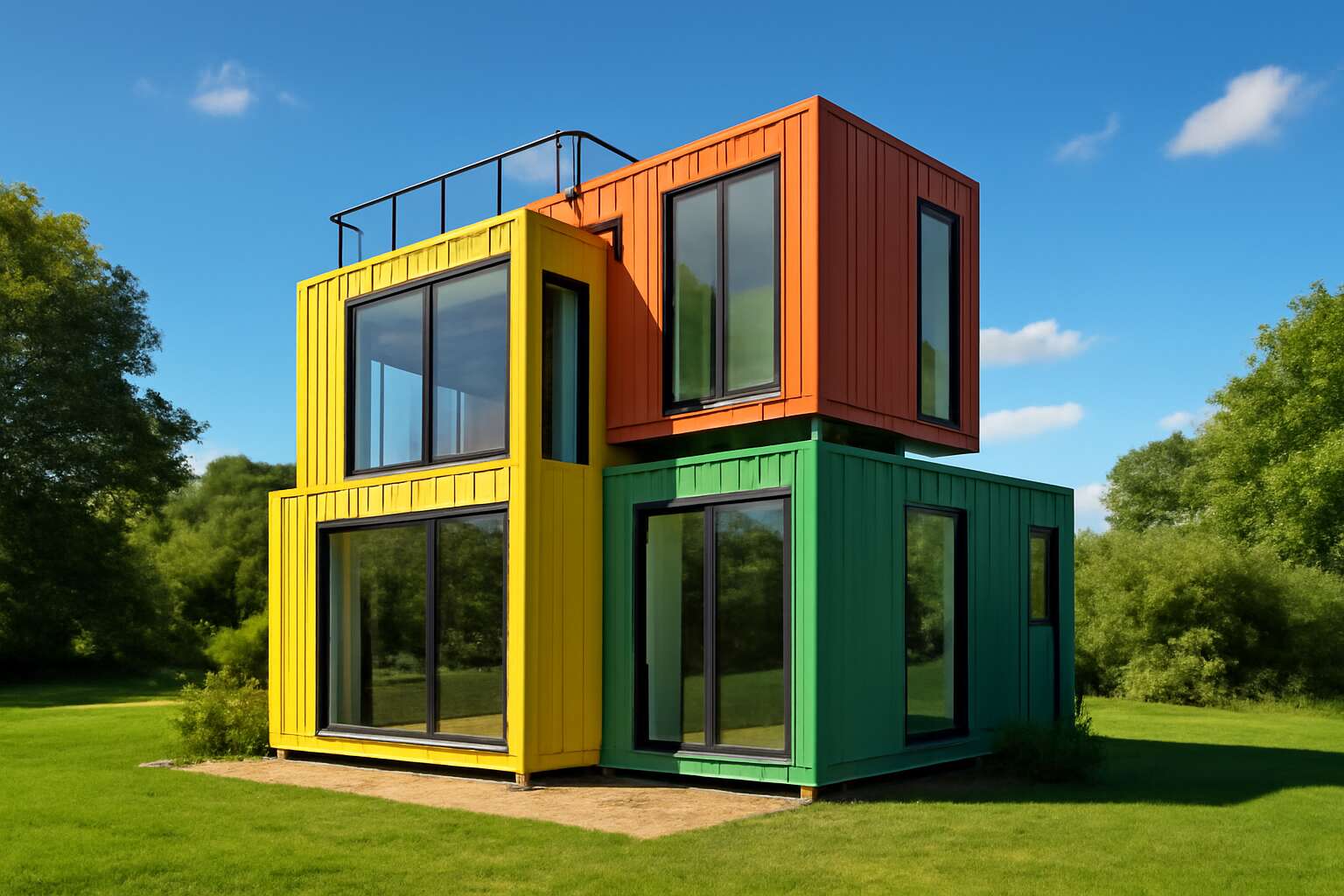
Benefits of Building with Shipping Containers
Cost-Effectiveness – Affordable construction compared to traditional methods
Building a house with shipping containers transforms the notion of home from a distant dream into an attainable reality, especially when considering cost-effectiveness. The affordability of using shipping containers as the foundation for your home in South Africa cannot be overstated. Traditional construction often involves hefty materials, labor-intensive processes, and extended timelines, all of which escalate costs significantly. In contrast, shipping container homes offer an innovative solution that reduces expenses without compromising on quality or style.
The true beauty lies in the inherent versatility of these containers, which can be repurposed with minimal modifications. This streamlined approach not only shortens construction time but also minimizes waste, further lowering overall costs. For those seeking a beautiful, functional home without the hefty price tag, a house with shipping containers provides an elegant pathway—making dream homes more accessible than ever before!
Sustainability – Eco-friendly benefits and recycling opportunities
Building with shipping containers isn’t just about affordability—it’s a conscious choice towards a more sustainable future. These sturdy steel structures can be repurposed multiple times, reducing the demand for new raw materials and cutting down on waste. In South Africa, where environmental concerns are increasingly at the forefront, a house with shipping containers offers a compelling eco-friendly alternative to traditional construction.
The recycling opportunities are vast. Shipping containers often sit unused after fulfilling their primary purpose, but transforming them into homes breathes new life into these massive steel boxes. They can be integrated seamlessly into eco-conscious designs, incorporating solar panels, rainwater harvesting, and green roofs. Such innovations not only elevate the sustainability profile of your home but also significantly lower your carbon footprint. Truly, a house with shipping containers isn’t just a space to live—it’s a statement of environmental responsibility and resourcefulness.
Durability and Strength – Robust features of shipping containers
When it comes to building a house with shipping containers, durability isn’t just a bonus—it’s the backbone of the entire project. These steel giants are engineered to withstand the roughest seas, the fiercest storms, and, let’s face it, the occasional runaway shopping trolley. Their robust features make them ideal for South Africa’s unpredictable weather, ensuring your home remains steadfast through heatwaves, heavy rains, and everything in between.
What truly sets shipping containers apart is their structural integrity. Unlike traditional building materials that can warp or degrade over time, these containers maintain their strength for decades. Reinforced corners, high-grade steel walls, and a design that’s inherently resistant to pests and rot mean your house with shipping containers isn’t just a trendy choice; it’s built to last.
To illustrate, consider these container champions:
- High load-bearing capacity
- Resistance to corrosion and pests
- Ease of stacking and modular expansion
Whether stacking them vertically or arranging them horizontally, their resilience remains unwavering. It’s no wonder that shipping containers are transforming into sought-after homes—proof that strength and sustainability can go hand in hand in South Africa’s innovative housing landscape.
Quick Construction Timeline – Faster build process for shipping container homes
Building a house with shipping containers dramatically shortens construction timelines. Unlike traditional building methods, which can take months or even years, a container home can be completed in a fraction of that time. The modular nature of shipping containers allows for quick assembly, minimizing delays caused by weather or labor shortages.
In fact, many projects can go from foundation to move-in within 8 to 12 weeks. This rapid turnaround is a game-changer for those seeking a quick, yet durable, home. The prefabricated units arrive ready for stacking or modification, allowing builders to focus on design rather than lengthy construction processes.
Because of this streamlined approach, building with shipping containers offers an efficient alternative for South African homeowners looking to create a sustainable, modern house with shipping containers without sacrificing quality or style.
Design Flexibility – Customizable layouts and styles
One of the most captivating aspects of building a house with shipping containers is the astonishing design flexibility it offers. Unlike traditional construction, which can be rigid and limiting, container homes can be tailored to fit almost any aesthetic or layout you envision. This adaptability makes it easier for homeowners to create a space that truly reflects their personality and lifestyle.
From open-plan living areas to multi-level designs, the modular nature of shipping containers allows for endless customization options. They can be stacked, combined, or modified with ease, opening up a world of possibilities for innovative architecture. Whether you desire a sleek modern look or a cozy rustic vibe, the design potential of a house with shipping containers is truly remarkable.
- Flexible layouts that grow with your family or needs.
- Unique aesthetic styles, blending industrial charm with contemporary comfort.
- Custom features such as large windows, rooftop gardens, or integrated outdoor spaces.
This versatility appeals especially to South African homeowners seeking a sustainable, stylish home that stands out. The ability to craft a custom house with shipping containers ensures each project is as unique as the stories it will hold—making it a heartfelt investment in your future. With endless options for personalization, building with shipping containers transforms a simple structure into a true reflection of your dreams and lifestyle.
Design Ideas for Shipping Container Homes
Modern and Minimalist Designs – Sleek aesthetics with open spaces
Imagine a residence that defies convention, where sleek aesthetics meet the raw industrial charm of recycled steel. Modern and minimalist designs for a house with shipping containers evoke a sense of futuristic elegance, transforming utilitarian structures into sanctuaries of style. The magic lies in the open spaces—airy interiors that breathe freedom and light, emphasizing simplicity without sacrificing sophistication.
Strategic placement of expansive glass panels and sliding doors blurs the boundary between indoors and outdoors, inviting nature to become part of the living experience. For those craving a touch of innovation, modular configurations allow for creative layouts, seamlessly connecting living areas with private retreats. The aesthetic appeal of a house with shipping containers is heightened by clean lines, neutral palettes, and subtle textures that create a harmonious balance.
Designers often incorporate elements such as rooftop gardens, green walls, or sleek metal finishes to enhance the modern allure. The result is a home that is not only visually stunning but also embodies the spirit of sustainability and contemporary living. With careful planning, a house with shipping containers becomes a statement of ingenuity—an architectural marvel rooted in minimalism yet bursting with possibility!
Eco-Friendly and Off-Grid Living – Energy-efficient features and renewable sources
Imagine transforming a humble shipping container into a self-sufficient sanctuary—this isn’t just a dream for eco-conscious homeowners; it’s an emerging reality sweeping across South Africa. With energy-efficient features and renewable sources, a house with shipping containers can redefine off-grid living. The allure lies in harnessing sustainable power, such as solar panels or wind turbines, seamlessly integrated into the design to minimize reliance on traditional energy grids.
Innovative design ideas often incorporate elements like rainwater harvesting systems, composting toilets, and passive cooling techniques, ensuring the home remains eco-friendly and resilient under any circumstances. For those seeking to push boundaries, a combination of these features creates a truly autonomous residence—reducing carbon footprints while maintaining modern comforts. The interplay of sustainable technology and container architecture unlocks a new realm of off-grid possibilities that are both functional and inspiring.
- Solar photovoltaic panels for clean energy
- Green roofs to enhance insulation and promote biodiversity
- Battery storage solutions for uninterrupted power supply
Every aspect of a house with shipping containers can be tailored to maximize energy efficiency, transforming utilitarian steel into a beacon of sustainable innovation. When combined with the flexibility of container architecture, these homes become not only a statement of environmental responsibility but also a testament to ingenuity—crafted for those who crave independence and a closer connection to nature.
Multi-Container Configurations – Stacking and combining containers for larger spaces
Imagine the potential of a house with shipping containers, where form and function dance in harmonious unison. When stacking and combining these steel giants, architects unlock a symphony of spatial possibilities—creating larger, more inviting environments that challenge conventional boundaries. The beauty lies in the modular nature of shipping containers; each unit can be seamlessly integrated, forming multi-container configurations that feel both expansive and intimate.
Some designs embrace a vertical ascent—stacking containers to craft multi-level sanctuaries that command the skyline—while others nestle containers side by side, forging open-plan living spaces filled with natural light. For those eager to explore further, innovative arrangements can incorporate
- interior courtyards
- sky bridges
- multi-story atriums
—each element elevating the aesthetic appeal and functional versatility of the house with shipping containers.
Whether for a cozy retreat or a sprawling family home, the visionary use of multi-container configurations breathes new life into recycled steel—transforming it into a statement of sustainable ingenuity. The possibilities are as boundless as the imagination, inviting homeowners in South Africa to redefine what it means to live sustainably, stylishly, and boldly.
Split-Level and Multi-Story Designs – Maximizing vertical space
Vertical innovation transforms the concept of a house with shipping containers from mere practicality into a stunning architectural statement. By harnessing the potential of split-level and multi-story designs, homeowners unlock a new realm of spatial possibilities. Imagine a home where each level seamlessly connects, creating a layered sanctuary that maximizes every inch of available space. This approach is especially compelling in South Africa, where land constraints often challenge traditional building methods.
Design ideas for shipping container homes often revolve around elevating the living experience—literally. Multi-story configurations can incorporate features such as mezzanines, sky bridges, or internal staircases, elevating the house with shipping containers into a multi-dimensional masterpiece. Such designs not only elevate aesthetic appeal but also offer functional benefits, like enhanced privacy and distinct zones for work, rest, and entertainment.
- Vertical stacking to craft multi-level sanctuaries that command the skyline.
- Side-by-side arrangements to foster open-plan living spaces filled with natural light.
Strategically combining containers in a split-level layout creates dynamic interiors that break away from conventional boxy forms. The interplay of different heights introduces visual interest and practical versatility—perfect for those eager to push the limits of sustainable, stylish living. With inventive design ideas like rooftop gardens or internal courtyards, the house with shipping containers can become a captivating haven, blending eco-consciousness with modern sophistication.
Tiny Homes and Compact Living – Small footprint, big functionality
In the realm of tiny homes and compact living, the house with shipping containers has emerged as a game-changer. It’s astonishing how a small footprint can translate into big functionality when designed thoughtfully. Creative use of limited space allows homeowners to craft cozy, efficient living environments that don’t compromise on comfort or style.
One compelling design idea involves stacking containers vertically to create multi-level sanctuaries. This approach not only maximizes the use of vertical space but also adds a striking visual element to the home. Incorporating features like mezzanines or internal staircases transforms a simple house with shipping containers into a multi-dimensional living space, perfect for South Africa’s land-constrained environments.
- Innovative internal layouts that optimize every inch
- Use of natural light to enhance open-plan areas
- Incorporating outdoor elements like rooftop gardens or courtyards
Alternatively, side-by-side arrangements of containers can foster open-plan living areas filled with natural light and fresh air. This layout makes the most of compact footprints while promoting a sense of spaciousness. Whether it’s a modest retreat or a more elaborate residence, a house with shipping containers can be tailored to meet diverse needs, proving that small isn’t necessarily limiting—especially when combined with clever design and a focus on functionality.
Construction Process of Shipping Container Homes
Planning and Design – Blueprints and layout considerations
Designing a house with shipping containers begins with a vision, a blueprint that transforms steel boxes into sanctuaries of innovation. The planning phase is a delicate dance between creativity and practicality, where every inch of space must serve purpose and aesthetic harmony. It’s an art to consider how the layout will flow—whether open-plan living or segmented zones—and how natural light will dance through the structure. The layout considerations for a house with shipping containers often involve maximizing the compact footprint while creating a sense of spaciousness, often achieved through stacking or side-by-side configurations.
Blueprints are the skeleton of this transformation, outlining not only the physical structure but also the integration of eco-friendly features—solar panels, rainwater harvesting, or insulation techniques—that amplify its sustainable charm. When planning, architects often consider the following:
- Optimal placement for windows to enhance natural ventilation
- Strategic stacking for multi-story designs that save space
- Custom door and window cutouts to amplify aesthetic appeal
These considerations help ensure that the house with shipping containers is not just a shell of recycled steel, but a vibrant, livable masterpiece. With thoughtful planning, the construction process becomes a harmonious symphony—each container fitting seamlessly into the whole, ready to be brought to life with ingenuity and care.
Container Acquisition and Inspection – Choosing the right containers and assessing condition
In the pursuit of transforming raw steel into a sanctuary of ingenuity, the construction process of a house with shipping containers demands meticulous attention to detail right from the outset. Container acquisition and inspection form the bedrock of this journey—selecting the right containers is crucial for ensuring both structural integrity and aesthetic potential. It’s tempting to overlook this step, but the longevity and safety of your home hinge on this initial assessment.
When sourcing shipping containers, it’s essential to scrutinize their condition thoroughly. Containers with rust, dents, or previous chemical exposure can compromise durability. Experts recommend opting for newer or well-maintained units, and sometimes, a simple visual inspection isn’t enough—non-destructive testing methods, like ultrasonic scans, can reveal hidden weaknesses. To streamline this process, consider the following:
- Assess the container’s structural integrity, ensuring no significant corrosion or damage
- Verify the container’s history, confirming it hasn’t been used for hazardous materials
- Inspect for proper door functionality and weatherproofing capabilities
This initial step is more than a mere formality; it’s the foundation upon which the entire house with shipping containers is built. Once the ideal containers are chosen and deemed structurally sound, the journey toward creating a resilient, eco-conscious home can truly commence, blending innovation with sustainability at every turn.
Foundation Setup – Preparing the site and foundation types
Transforming a mere patch of earth into a resilient house with shipping containers begins with laying a solid foundation—an act of faith in the future. The process demands a careful selection of site and foundation types that can support the weight and unique structure of these steel giants. In South Africa’s diverse landscape, choosing the right foundation is more than a technicality; it’s a commitment to sustainability and longevity.
Preparation starts with assessing the terrain—flat, stable ground is ideal, but in uneven terrain, additional reinforcement may be necessary. The foundation options vary depending on the project’s scope and location, including concrete slabs, pier foundations, or even gravel beds. Each offers distinct advantages for stability and insulation, ensuring your house with shipping containers remains resilient against the elements.
In some instances, a pier foundation provides an excellent solution for uneven terrain, elevating the container and allowing for proper drainage. Conversely, a concrete slab offers a unified base, perfect for flat sites where a seamless, weatherproof seal is paramount. Selecting the appropriate foundation type is an art that fuses engineering prowess with a sensitivity to the land’s character, ensuring every container rests securely and harmoniously within its environment.
Modifications and Insulation – Cutting, stacking, and insulating containers
The transformation from raw steel containers to a fully functional house with shipping containers is a meticulous dance of precision and creativity. Once the containers arrive, the real artistry begins—with cutting, stacking, and insulating—each step crucial in shaping a durable, comfortable home. Cutting the steel requires specialized tools, revealing the hidden potential within each container. Stacking them strategically creates the desired layout, whether it’s a single-story retreat or a multi-level masterpiece.
Insulation is the secret to turning a cold, metallic shell into a cozy sanctuary. High-quality insulation materials are carefully fitted between walls, floors, and ceilings, ensuring energy efficiency and comfort in South Africa’s varied climate. The insulation process also involves sealing joints and gaps, preventing drafts and moisture intrusion. This attention to detail preserves the integrity of your house with shipping containers against the elements, while also enhancing sustainability and reducing long-term costs. The result is a seamless blend of industrial strength and modern comfort, all within a uniquely customizable space that reflects your vision.
Interior Finishing – Furnishing, plumbing, and electrical work
The transformation of a house with shipping containers from raw, industrial shells into inviting living spaces is a marvel of modern ingenuity. Once the structural modifications and insulation are complete, the journey transitions seamlessly into interior finishing—an intricate dance of plumbing, electrical work, and furnishing that breathes life into these steel canvases. Every wire strung, every pipe laid, and each piece of furniture chosen reflects a deliberate effort to blend form with function.
Electrical wiring is meticulously integrated, ensuring safe and efficient power distribution across the expansive open-plan interiors. Plumbing systems are carefully installed, often requiring innovative routing within the confined yet flexible container layouts. For a truly cohesive design, many opt for modern fixtures and eco-friendly appliances that complement the minimalist aesthetics of a house with shipping containers. The process often involves a layered approach, starting with hidden wiring and plumbing that are subsequently concealed behind feature walls and built-in cabinetry.
Furnishing a shipping container home calls for a balance of practicality and style. Durable materials that withstand South Africa’s diverse climate are combined with sleek, space-saving furniture. To maximize functionality, some prefer an ordered sequence—such as:
- Positioning of major furniture pieces for optimal flow.
- Incorporation of multi-purpose units to enhance space efficiency.
- Finishing touches that personalize the interior aesthetic, transforming industrial into intimate.
This meticulous process ensures that every element within the container home contributes to a harmonious living environment—proof that a house with shipping containers can be both resilient and remarkably refined. The end result is not just a dwelling but a bespoke sanctuary, crafted with precision and passion, ready to withstand the elements while reflecting the unique personality of its inhabitants. Truly, this is architecture reimagined, where steel becomes a vessel for comfort and creativity alike.
Final Inspection and Certification – Ensuring safety and compliance
The culmination of a meticulously orchestrated construction journey resides in the final inspection and certification process—an essential phase that safeguards safety, legal compliance, and peace of mind. For a house with shipping containers, this stage is as vital as the initial design, ensuring that every steel panel and interior fixture adheres to South African building standards. It’s not merely about ticking boxes; it’s about affirming that your innovative dwelling can withstand the test of time and elements.
During this phase, qualified inspectors perform a comprehensive assessment—examining structural integrity, electrical safety, plumbing functionality, and insulation quality. This rigorous scrutiny guarantees that the house with shipping containers aligns perfectly with local codes and environmental regulations. Only after passing these detailed evaluations can the residence be granted the coveted certificate of occupancy, transforming it from a construction project into a genuine home.
To streamline this process, many builders follow a systematic approach:
- Initial inspection of structural modifications and foundation stability.
- Verification of electrical wiring and plumbing installations for safety and compliance.
- Final review of insulation, ventilation, and aesthetic finishes.
- Submission of all documentation for certification approval.
This layered scrutiny not only elevates safety standards but also affirms the durability of the house with shipping containers—proof that innovation need not compromise security or legality. Ultimately, this ensures that the steel structure, transformed into a bespoke sanctuary, is ready to welcome its inhabitants with confidence and assurance.
Key Factors to Consider When Building a Shipping Container Home
Zoning Laws and Building Codes – Legal requirements and permits
Navigating the labyrinth of zoning laws and building codes is an essential, often overlooked facet of constructing a house with shipping containers. In South Africa, where urban expansion is rapid and regulatory frameworks are evolving, understanding the legal landscape can mean the difference between a dream realized and a costly setback. Local authorities enforce specific permits and compliance standards to ensure safety, environmental sustainability, and community harmony, which can vary significantly between municipalities.
Legal requirements for a house with shipping containers often involve detailed planning approvals, adherence to building height restrictions, and compliance with fire safety standards. Failure to secure the necessary permits can lead to hefty fines or even demolition orders. It’s prudent to consult with local zoning offices early in the design process, especially when contemplating modifications like stacking or multi-container configurations.
A critical step involves verifying whether the intended site permits a residential structure of this nature. Some areas impose restrictions based on land use, proximity to protected zones, or aesthetic guidelines. By respecting these parameters, developers can avoid legal entanglements, ensuring their innovative housing solutions meet South Africa’s rigorous standards.
Location and Site Selection – Choosing a suitable environment
Choosing the perfect site for your house with shipping containers is a crucial step that can make or break your project. In South Africa’s rapidly urbanizing landscape, the right location ensures compliance with local zoning laws and building codes, preventing costly legal hiccups down the line. A spot with good access to utilities, transportation, and amenities not only boosts convenience but also aligns with environmental sustainability goals.
When selecting a site, consider factors such as land stability, proximity to protected zones, and aesthetic guidelines that may restrict certain designs. Some municipalities may impose restrictions on stacking or multi-container configurations, so thorough research is essential.
Additionally, evaluating the land’s natural features—such as drainage, soil quality, and sunlight exposure—can significantly influence the durability and energy efficiency of your house with shipping containers. Remember, a well-chosen site doesn’t just host a structure; it enhances the entire living experience while ensuring legal peace of mind.
Budget Planning – Cost estimates and budgeting strategies
Embarking on the journey to create your dream house with shipping containers in South Africa is as thrilling as it is economical—if you plan wisely, that is. Budget planning for such innovative homes requires a careful eye and a dash of entrepreneurial spirit. While shipping container houses boast cost-effectiveness and rapid construction timelines, overlooking the financial details can turn your dream into a nightmare.
Start by estimating the total cost, factoring in container acquisition, modifications, insulation, and interior finishing. Remember, unexpected expenses lurk around every corner—like that surprise fee for extra steel reinforcement or unforeseen foundation work. To stay on course, develop a comprehensive budgeting strategy that includes contingency funds—because in the realm of shipping container homes, surprises are the rule, not the exception.
An effective approach involves breaking down expenses into manageable phases. For example, initial costs might include
- Container purchase
- Transport and site preparation
- Structural modifications
followed by finishing touches like electrical wiring and interior decor. Keeping a detailed ledger ensures you don’t get carried away with over-ambitious designs—remember, a house with shipping containers can be as simple or as luxurious as your wallet allows.
Ultimately, meticulous budget planning isn’t just about saving pennies; it’s about transforming your vision into a tangible, sustainable reality—without the financial hangover. Because in the end, the key to a successful shipping container house project lies in balancing creativity with fiscal prudence, ensuring your eco-friendly, stylish haven stands tall for years to come.
Structural Modifications – Reinforcements and modifications needed
Building a house with shipping containers isn’t just a matter of stacking steel boxes; it’s about transforming raw infrastructure into a resilient sanctuary. Structural modifications are the backbone of this metamorphosis, ensuring safety and longevity. Reinforcements, especially around doorways and windows, are essential to uphold the integrity of the design—without them, the entire structure risks compromise. In South Africa’s seismic zones or areas prone to strong winds, additional bracing and foundation anchoring become non-negotiable.
One of the most crucial considerations involves the modifications needed for load-bearing walls. Shipping container homes often require cutting and welding to create open-plan living spaces. This process demands expert assessment and precision to prevent warping or weakening the steel. Insulation also plays a pivotal role; without proper thermal barriers, the house with shipping containers could become uncomfortably hot or cold, especially in South Africa’s diverse climate zones.
When planning for structural reinforcements, it’s wise to consider an ordered approach:
- Assessing container condition and integrity
- Designing load distribution for multi-container configurations
- Implementing additional steel reinforcements where necessary
- Ensuring compliance with local building codes and safety standards
Every modification, from cutting out sections to installing reinforcements, must be meticulously executed to preserve the container’s strength. This is the secret to a house with shipping containers that endures the test of time—standing tall and proud, no matter what South Africa’s unpredictable weather throws its way.
Energy Efficiency and Insulation – Maintaining comfort and reducing energy costs
When building a house with shipping containers, energy efficiency and insulation are crucial for maintaining comfort and reducing energy costs. South Africa’s diverse climate—ranging from scorching summers to chilly winters—demands effective thermal management. Without proper insulation, a house with shipping containers can turn into an oven or a fridge, making living uncomfortable and energy bills skyrocket.
Key considerations include choosing high-quality insulation materials like spray foam or PIR panels, which provide superior thermal barriers. Additionally, strategic placement of windows and doors, along with reflective coatings on the exterior, can significantly improve energy retention. Insulating the container walls helps prevent heat transfer, ensuring a consistent indoor temperature. For those interested in off-grid living, integrating renewable energy sources such as solar panels can further enhance a house with shipping containers’ energy efficiency.
In some cases, implementing a combination of insulation techniques and energy-efficient appliances can slash cooling and heating costs. An often-overlooked aspect is sealing gaps and joints meticulously; these small details can lead to substantial energy savings and improved comfort. Ultimately, prioritizing insulation and energy-efficient design transforms a simple shipping container into a sustainable, cozy home capable of weathering South Africa’s unpredictable weather patterns.
Resale Value and Longevity – Long-term investment considerations
When investing in a house with shipping containers, understanding its resale value and longevity is essential. These structures are gaining popularity, but long-term investment success hinges on strategic planning. A well-maintained, durable container home can appreciate significantly over time, especially in South Africa’s unpredictable climate.
Key factors influencing longevity include the quality of materials used and the initial condition of the containers. Proper inspection before acquisition ensures that corrosion, structural weaknesses, or previous damage won’t compromise the integrity of the home. Additionally, choosing containers with a solid corrosion-resistant coating can extend the lifespan of your house with shipping containers.
Resale value is often tied to the home’s overall design and adaptability. A creatively designed, energy-efficient house with shipping containers appeals to modern buyers seeking eco-friendly, cost-effective living spaces. Incorporating features such as multi-container configurations or split-level designs can significantly boost market appeal.
In South Africa, the durability of your shipping container house depends heavily on meticulous foundation setup and robust structural modifications. Regular maintenance and updates to insulation, windows, and roofing also play a crucial role. When these factors are carefully managed, a house with shipping containers can stand tall against time, transforming from a simple shelter into a lasting investment that promises both resilience and high resale potential.
Popular Examples of Shipping Container Homes
Luxury Shipping Container Homes – High-end designs and amenities
Luxury shipping container homes are redefining modern living. These high-end designs blend innovative architecture with premium amenities, creating a luxurious yet eco-friendly home. Imagine expansive glass walls, rooftop decks, and state-of-the-art appliances—all within a house with shipping containers. This trend is gaining traction worldwide, including in South Africa, where durability and style meet.
Some examples showcase multi-container configurations that form spacious, multi-story residences. These homes often feature open-plan living areas, large windows, and sustainable energy solutions. The versatility of a house with shipping containers allows for sleek, minimalist aesthetics or more elaborate, custom designs. Luxury container homes prove that sustainable living can also be sophisticated and comfortable.
Tiny Home Containers – Compact and affordable living units
Among the most compelling innovations in contemporary architecture are the popular examples of houses with shipping containers that transcend mere functionality, morphing into statement pieces of design ingenuity. Tiny home containers exemplify this trend, offering compact and affordable living units that challenge traditional notions of space and comfort. These miniature marvels are not just economical; they embody a philosophical shift toward minimalism and sustainability that resonates deeply within South Africa’s evolving housing landscape.
What makes these tiny home containers particularly captivating is their ability to be customized with multi-purpose fixtures and clever storage solutions, maximizing every inch of available space. Their modular nature allows for seamless integration into larger compounds or standalone units, creating a harmonious blend of practicality and aesthetic appeal. The versatility of a house with shipping containers facilitates innovative layouts—stacked vertically or arranged in sprawling configurations—transforming limited footprints into dynamic, livable environments.
In regions where land is at a premium, these small yet sophisticated dwellings serve as a testament to the potential of shipping containers to redefine affordability and design flexibility. Whether nestled in urban settings or integrated into rural retreats, tiny home containers embody a future where sustainable, stylish living is accessible to all. Such examples underscore the profound capacity of this construction method to foster a new wave of innovative, eco-conscious homes across South Africa’s diverse terrains.
Container Communities – Clustering containers for communal living
Across South Africa, the concept of container communities is gaining momentum, transforming the landscape of affordable and sustainable living. Clustering containers to create vibrant, communal spaces offers a unique blend of privacy and social interaction—an innovative approach to modern housing. These container communities foster a sense of belonging, where residents share amenities and green spaces while enjoying the flexibility of a house with shipping containers.
What makes these developments truly captivating is their potential for customization. Residents and designers can craft multi-purpose zones, communal kitchens, and open-air lounges, all within the modular framework of shipping containers. This approach not only reduces construction time but also promotes eco-conscious living, as recycled containers form the backbone of these vibrant neighborhoods.
- Designing for shared spaces while maintaining individual privacy.
- Implementing renewable energy sources to power entire container communities.
- Creating interconnected layouts that foster a sense of community and accessibility.
Whether nestled in urban outskirts or sprawling rural settings, container communities exemplify the future of adaptable, stylish, and sustainable living. They stand as testament to how a house with shipping containers can go beyond mere shelter—becoming a thriving hub of innovation and social cohesion in South Africa’s diverse terrains.
Off-Grid Container Homes – Self-sufficient and sustainable models
Off-grid container homes are the epitome of self-sufficiency—living with a house with shipping containers that not only minimizes your carbon footprint but also offers a unique sense of independence. Imagine harnessing solar power, harvesting rainwater, and generating your own energy while nestled in a sleek, modular space that adapts to your lifestyle. South Africa’s rugged terrain and sunny climate make these eco-conscious marvels particularly appealing, allowing residents to escape the hustle and bustle and truly embrace off-grid living.
Popular examples include tiny homes with shipping containers that maximize every inch of space, creating cozy yet functional living environments. These compact dwellings often feature innovative insulation techniques to battle South Africa’s varying climate, ensuring comfort year-round. For those craving more room, multi-container configurations can be stacked or combined to form expansive, multi-story residences that blend modern aesthetic with rugged durability.
In addition to their stylish appeal, off-grid container homes often incorporate renewable energy sources like solar panels and wind turbines, transforming a simple house with shipping containers into a sustainable haven. Whether situated in remote rural areas or tucked away in scenic mountain retreats, these models demonstrate that eco-friendly, self-sufficient living isn’t just a dream—it’s a tangible reality for South Africans seeking independence and style in perfect harmony.
Creative and Unique Uses – Commercial, guest houses, and art studios
When it comes to innovative architecture, few concepts evoke as much intrigue as the creative repurposing of shipping containers. The versatility of a house with shipping containers has catalyzed a wave of unconventional yet striking designs across South Africa. From vibrant art studios that double as inspirational sanctuaries to sleek commercial spaces that command attention, these modular marvels transcend traditional boundaries.
Guest houses built from shipping containers are rapidly gaining popularity, offering an affordable yet stylish alternative for hospitality entrepreneurs. Their compact footprint and customizable layouts make them perfect for scenic retreats or rural getaways. For those with a penchant for the arts, container art studios provide a blank canvas—literally—where creativity can flourish in a space that’s as inspiring as the work produced within.
In the realm of commercial enterprise, container-based structures stand out for their rapid deployment and cost-efficiency. They can be transformed into pop-up shops, cafes, or even co-working hubs—an ideal solution for entrepreneurs seeking flexibility and visual impact. The ability to stack or cluster containers further enhances these uses, creating dynamic, multi-level environments that are both eye-catching and functional.
Future Trends in Shipping Container Home Construction
Innovative Building Techniques – 3D printing and modular construction
As sustainable architecture continues to evolve, the future of a house with shipping containers is more promising than ever. Cutting-edge building techniques such as 3D printing and modular construction are poised to revolutionize how we conceive of container homes. Imagine a world where entire structures are assembled with precision, reducing waste and construction time—a feat made possible by these innovative methods.
3D printing, in particular, offers an elegant solution for creating complex, custom-designed components that seamlessly integrate with shipping container structures. This technology allows for rapid prototyping and onsite manufacturing, cutting down construction timelines significantly. Meanwhile, modular construction—famous for its adaptability—enables homeowners to expand or reconfigure their house with relative ease. For example, stacking containers or adding modular units can create multi-story or expansive family homes, all while maintaining a sleek aesthetic.
Adopting these advanced techniques ensures that future houses with shipping containers will not only be more eco-friendly and cost-effective but also customizable and resilient. As the industry embraces these innovations, it’s clear that the horizon holds exciting possibilities for sustainable, stylish, and smart container homes—truly a marvel of modern architecture.
Integration of Smart Home Technology – Automated systems and IoT
As technology advances at an unprecedented pace, the integration of smart home technology into house with shipping containers is transforming the way we experience sustainable living. The future isn’t just about eco-friendly materials or modular flexibility; it’s about creating homes that think, adapt, and respond to our needs. Imagine a house with shipping containers that not only provides shelter but also anticipates your comfort through automated systems powered by the Internet of Things (IoT).
From intelligent lighting and climate control to security systems that can be monitored remotely, these innovations are making container homes more resilient and user-centric. The seamless connectivity ensures that energy consumption is optimized, reducing costs while maintaining a high standard of living. As we push the boundaries of what’s possible, integrating smart technology into container homes becomes an essential step toward a future where sustainability and convenience coexist effortlessly.
Green Building Practices – Eco-friendly materials and renewable energy
As the world leans into sustainable innovation, future trends in shipping container home construction are pushing the boundaries of eco-friendly design. Green building practices are now at the forefront, transforming house with shipping containers into marvels of environmental responsibility. By harnessing renewable energy sources like solar panels and wind turbines, these homes reduce reliance on traditional power grids, making off-grid living a tangible reality.
Advancements in eco-friendly materials, such as recycled steel and sustainable insulation options, are enhancing the overall footprint of container homes. Integrating these materials not only boosts durability but also aligns with the core principles of green building practices. Moreover, innovative techniques such as stacking and modular assembly allow for multi-container configurations, enabling larger, more complex structures without sacrificing sustainability.
- Utilization of solar energy for powering automated systems
- Implementation of rainwater harvesting and greywater recycling
- Adoption of biodegradable or recycled interior finishes
These trends are shaping a future where house with shipping containers isn’t just a cost-effective or stylish choice but a beacon of eco-conscious innovation. The marriage of green building practices with cutting-edge technology fosters homes that are resilient, sustainable, and inherently forward-thinking—perfect for a planet eager for change.
Government Incentives and Regulations – Support for sustainable housing initiatives
Governments worldwide are increasingly recognizing the potential of sustainable housing initiatives, especially for innovative projects like a house with shipping containers. In South Africa, this support is becoming more visible through incentives that encourage eco-friendly construction and modernization of urban spaces. These policies not only promote environmental responsibility but also pave the way for a future where shipping container homes are a mainstream solution to housing shortages and ecological concerns.
Support often manifests as grants, tax rebates, or streamlined permitting processes, making the construction of a house with shipping containers more accessible and financially viable. Additionally, regulations are evolving to accommodate modular and off-grid designs, allowing homeowners to push the boundaries of traditional architecture while adhering to safety standards. This regulatory environment encourages the adoption of green building practices, making sustainable living more than just a trend—it’s a mandated path forward.
For those daring enough to explore this frontier, understanding the current legislative landscape is vital. South Africa’s zoning laws, building codes, and permit requirements are gradually adapting to support container-based dwellings. This shift signals a new era of urban renewal and eco-conscious innovation, where government incentives act as catalysts for transforming shipping container homes from niche projects into viable, eco-friendly solutions for future generations.
Community and Urban Development – Container housing in dense urban areas
As urban landscapes continue to evolve, innovative solutions like the house with shipping containers are gaining momentum—especially in dense South African cities where space is at a premium. Future trends highlight a shift towards container housing communities that foster connectivity and sustainability. Imagine stacking containers to create multi-story apartments or clustering them into eco-friendly enclaves—these concepts are no longer science fiction but the blueprint for tomorrow’s urban development.
Smart integration of container homes within cityscapes offers a tantalizing glimpse into how dense urban areas can maximize space without sacrificing style or functionality. Modular construction techniques make it possible to design flexible layouts that adapt seamlessly to evolving needs. Additionally, the rise of container communities—where residents share communal gardens, co-working spaces, and green zones—promises a more interconnected and sustainable lifestyle.
- Urban infill projects turning parking lots into vibrant container neighborhoods
- Vertical stacking of containers in high-rise developments for efficient land use
- Hybrid models combining tiny home containers with larger multi-container complexes
As cities grapple with housing shortages and ecological pressures, the future of the house with shipping containers in community and urban development looks brighter than ever. These adaptable, eco-conscious structures are poised to redefine how we think about space, community, and sustainability in South Africa’s bustling urban centers.



0 Comments